

























Kurta Sets for Working Women Are Quietly Replacing Office Formals in North India

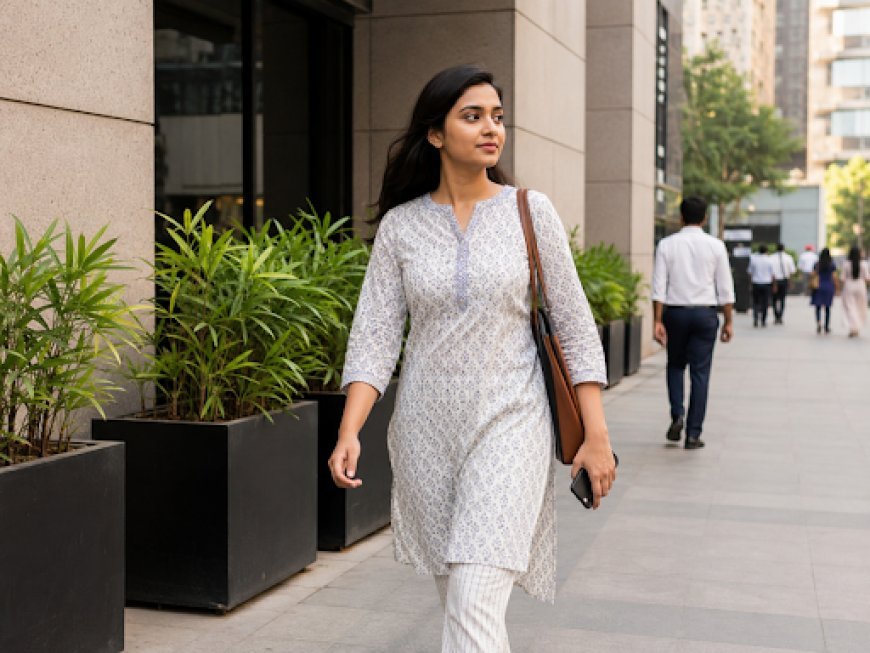
Across Chandigarh, Mohali and Ludhiana, office dressing has become less about copying a Western formal template and more about looking polished through a long, hot workday. That is where kurta sets for working women have found space: they are coordinated enough for a desk job, familiar enough for North Indian workplaces and easier to manage than separates that need constant ironing, layering or adjustment. The shift is not just about fashion; it reflects how women now balance commute comfort, office presentation and after-work errands in the same outfit.
The Office Dress Code Has Become More Flexible
Many North Indian workplaces still expect clothing to look neat, modest and intentional, but fewer offices treat Western formals as the only acceptable version of professional dressing. A straight kurta with tailored pants, a minimal dupatta and closed flats can read as office-ready without looking ceremonial. For women moving between a morning commute, desk hours and errands after work, that balance matters more than whether the outfit fits an old corporate uniform idea.
Why Kurta Sets for Working Women Became the Default Choice
A kurta set solves a problem formal Western wear never quite managed — it removes almost all of the daily decision-making. One top, one bottom, already designed to match, with a dupatta that can be added or dropped depending on the day. There’s no blazer to dry-clean, no blouse that needs an undershirt, no belt-or-heels negotiation every morning. For a woman juggling a commute, a household and a job, that can mean fewer decisions at 7 a.m., not a style statement.
Access has also changed the way office sets are put together. Instead of depending only on seasonal, ready-made racks, some women choose fabric first and have a local tailor copy a fit they already trust. That makes it easier to repeat a straight-cut kurta, adjust sleeve length or choose a pair of trousers that works for sitting through the day. For readers who prefer to buy fabric online and then stitch locally, the appeal is control: colour, drape and comfort are decided before the garment reaches the tailor, not after.
Comfort Now Has to Look Office-Ready
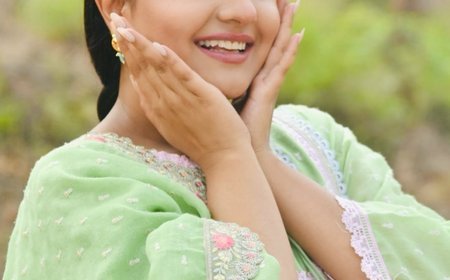
Comfort here does not mean looking casual. It means the outfit should not punish the wearer for doing ordinary workday things: walking from parking to office, sitting through meetings, taking a scooter or cab, eating lunch without worrying about a tight waistband, and still looking presentable by evening. That is why the strongest office kurta sets are usually restrained rather than festive: muted prints, straight or slightly A-line cuts, trousers that do not cling, and necklines that do not need constant adjustment. The point is not to make ethnic wear more elaborate; it is to make office dressing less fussy.
What a Kurta Set Needs to Actually Survive a Workday
Not every kurta set holds up the same way across an eight-hour day, though. The fabric underneath the print is usually the difference between something that still looks put-together at 6 p.m. and something that’s creased and clinging by 2 p.m.
|
Fabric Choice |
Daily Comfort |
How It Holds Up by Evening |
|
Pure Cotton |
Excellent breathability |
Crisp early in the day; it can crease and look tired by evening |
|
Cotton Blend with a Drapey Finish |
Breathable with a smoother fall |
Holds its shape and drape through the evening |
|
Linen-Cotton or Textured Blend |
Semi-formal office look |
Can wrinkle, but still looks intentional |
For a set that has to last from office hours into evening plans, a soft, lightweight viscose blend can be a practical middle option because it gives more fluid drape than crisp cotton while still feeling appropriate for daily wear; the exact result still depends on weave, lining and care.

One Set Now Has to Cover More Than the Office
In North India, a work outfit often has to survive more than office hours. A small family visit, a school event or an evening errand may happen without time to change, so women are choosing sets that can shift with jewellery, footwear or a dupatta rather than keeping separate clothes for every minor occasion. That makes the office kurta set less of a fashion trend and more of a practical wardrobe shortcut.
Why This Shift Looks Less Seasonal Than Before
That is why the shift feels less like a passing trend and more like a correction in how office dressing is judged. For many working women in North India, the best outfit is no longer the one that looks most corporate; it is the one that stays neat, comfortable and culturally natural through the full day. Kurta sets have become useful because they solve that everyday problem quietly.
What's Your Reaction?
 Like
0
Like
0
 Dislike
0
Dislike
0
 Love
0
Love
0
 Funny
0
Funny
0
 Angry
0
Angry
0
 Sad
0
Sad
0
 Wow
0
Wow
0