











Punjab Congress at a Crossroads: Can the Party Reinvent Itself Before 2027?

CHANDIGARH: The Punjab Congress finds itself at a critical juncture. As the party prepares for a change in its state leadership and organizational structure, a larger question looms over its future: can the existing leadership revive the party's fortunes, or is it time to bring forward an entirely new generation of leaders?
The Congress remains the principal opposition party in Punjab and arguably the only political force capable of mounting a serious challenge to the ruling Aam Aadmi Party (AAP) in the 2027 Assembly elections. However, despite possessing a long list of experienced leaders, the party continues to struggle with factionalism, internal rivalries and a lack of collective direction.
The leadership currently at the forefront of Punjab Congress consists largely of tried and tested politicians who have held important positions in government and the organization. While their experience cannot be questioned, critics argue that many of these leaders are viewed by voters as "spent forces" who represent the past rather than the future.
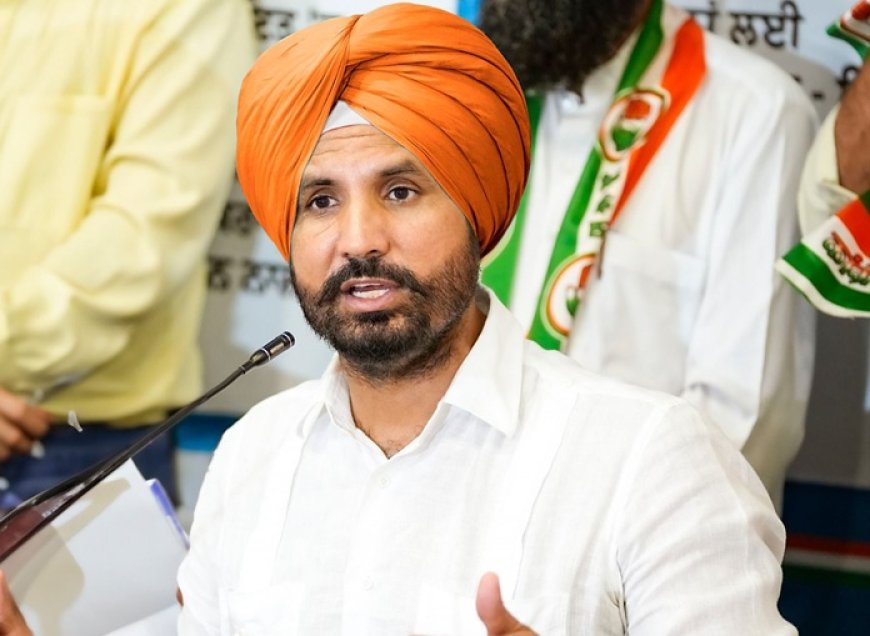
State Congress president Amarinder Singh Raja Warring has often projected himself as an aggressive opposition leader, but his biggest challenge has been maintaining unity within the party. Several senior leaders are believed to be dissatisfied with his style of functioning and his ability to keep the organization together.
Former Chief Minister Charanjit Singh Channi and senior MLA Rana Gurjit Singh are reportedly not fully aligned with the present state leadership. Similarly, Congress Legislature Party leader Partap Singh Bajwa, one of the party's most experienced leaders, is often seen as projecting himself as a chief ministerial contender. His differences with Raja Warring have been visible on several occasions.
Another senior leader, former Deputy Chief Minister Sukhjinder Singh Randhawa, is also considered an aspirant for the top position and is said to be unhappy with the current organizational setup. The existence of multiple power centres has made it difficult for the Congress to present a united front before the electorate.
The challenge before the Congress has become more pressing following the BJP's decision to appoint former Congress leader Kewal Singh Dhillon as its Punjab president. By choosing a prominent Jat Sikh face, the BJP has attempted to strengthen its appeal among Punjab's dominant farming community and expand its political footprint in the state.
Political observers believe there is growing public dissatisfaction with the AAP government on several fronts. Yet dissatisfaction alone may not be enough to bring Congress back to power. The electorate is also looking for a credible alternative and a clear leadership vision.
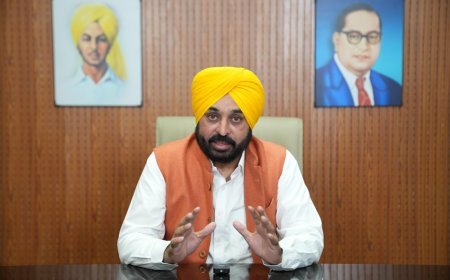
Chief Minister Bhagwant Mann remains politically active and has effectively begun positioning himself for the next electoral battle. The AAP leadership continues to emphasize governance and welfare schemes while preparing for a tough contest in 2027.
The BJP, on the other hand, has repeatedly claimed that it will form the next government in Punjab. However, political realities suggest that achieving this objective independently would be extremely difficult. Many analysts believe that the BJP's path to power would require some form of understanding or alliance with the Shiromani Akali Dal, despite the strained relationship between the two parties since the farmers' agitation.
If the Congress, AAP, BJP and Shiromani Akali Dal contest separately, the electoral battle is likely to remain primarily a contest between AAP and Congress. While the BJP may improve its vote share, converting that support into a governing majority would be a formidable challenge. The Akali Dal, meanwhile, continues to grapple with its own organizational and electoral difficulties.
Amid these changing political equations, speculation persists in political circles that if the BJP fails to emerge as a serious contender, it could indirectly benefit AAP by dividing anti-incumbency votes and preventing Congress from returning to power. Such claims remain unverified and are largely the subject of political gossip rather than established fact.
For the Congress, however, the central issue is not what its rivals may do but what it must do itself. The party's leadership transition offers an opportunity to rethink its strategy and organizational culture. Merely replacing one senior leader with another may not be sufficient. Punjab Congress faces a deeper challenge of reconnecting with voters, energizing its cadre and presenting a fresh leadership team capable of inspiring confidence across regions and communities.
As Punjab's political landscape evolves, the Congress must decide whether it wants to remain dependent on familiar faces or take the risk of nurturing a new generation of leaders. The answer to that question may well determine whether the party returns to power in 2027 or remains confined to the opposition benches.
What's Your Reaction?
Like
0
Dislike
0
Love
0
Funny
0
Angry
0
Sad
0
Wow
0