





























Punjab’s education paradox: ‘Education revolution’ claims amid empty classrooms, teacher shortage and falling enrolment
Punjab’s education system is facing a growing contradiction. While the Aam Aadmi Party (AAP) government claims to have brought an “education revolution” and made Punjab the country’s leading state in school education, ground realities present a different picture — thousands of teacher posts remain vacant, government schools are losing students, hundreds of schools have been merged or closed, and unemployed teachers continue to protest for jobs.

“Punjab has classrooms without teachers and teachers without jobs.”
By Satinder Bains
CHANDIGARH: Punjab’s education system is facing a growing contradiction. While the Aam Aadmi Party (AAP) government claims to have brought an “education revolution” and made Punjab the country’s leading state in school education, ground realities present a different picture — thousands of teacher posts remain vacant, government schools are losing students, hundreds of schools have been merged or closed, and unemployed teachers continue to protest for jobs.
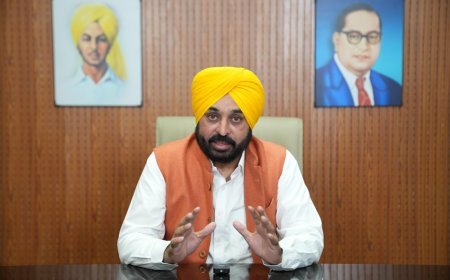
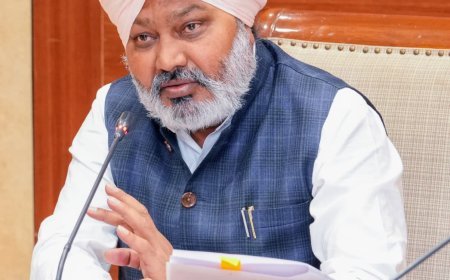
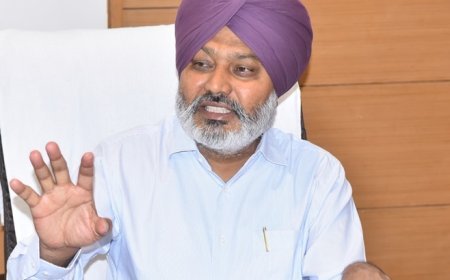
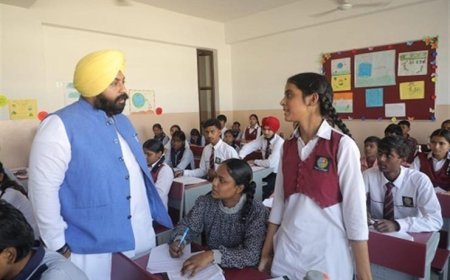
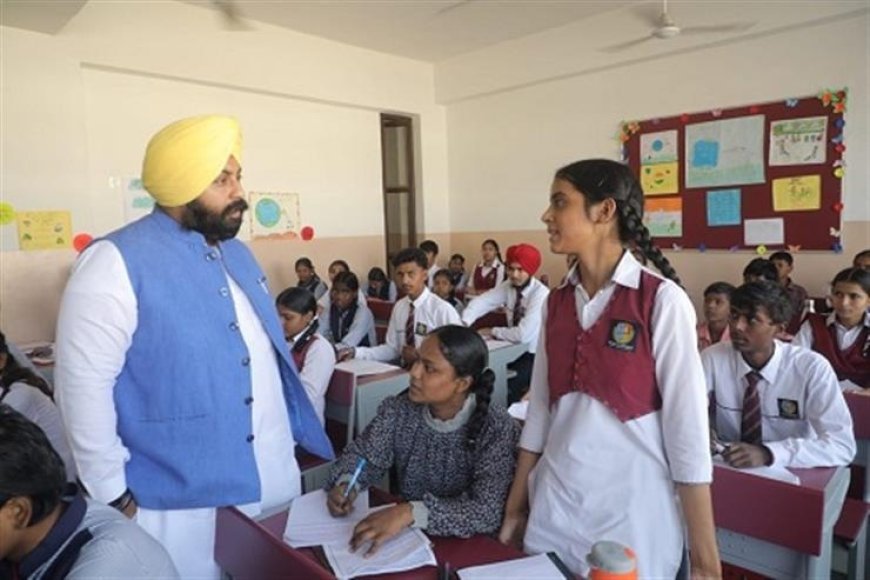
Education Minister Harjot Singh Bains has repeatedly highlighted the achievements of the Bhagwant Mann government, claiming that Punjab has overtaken Kerala in school education rankings. The minister has projected Schools of Eminence, smart classrooms, improved infrastructure, digital facilities, teacher training programmes and better academic results as symbols of a major transformation in the state’s education sector.
However, critics, teachers’ organisations and education experts argue that the success of an education system cannot be judged only by infrastructure and rankings. They say the real test lies in the number of teachers available in classrooms, student retention, quality of teaching and the confidence of parents in government schools.
Government schools lose students
One of the biggest concerns facing Punjab’s education system is the declining enrolment in government schools.
According to UDISE+ data, the number of students in Punjab government schools declined from around 28.23 lakh in 2023-24 to 26.69 lakh in 2024-25, a fall of nearly 1.54 lakh students in a single year.
At the same time, private schools recorded around 30.63 lakh students, indicating that private institutions now have a larger share of school-going children in the state.
The shift of students from government to private schools raises questions about the public education system despite government claims of improvement.
Parents often cite reasons such as:
- shortage of subject teachers,
- preference for English-medium education,
- better preparation for competitive examinations,
- perception of better academic support in private schools.
Nearly 2,000 government schools reduced
Punjab has also witnessed a decline in the number of government schools over the past decade.
The state had over 21,000 government schools around 2014-15, while the number has now fallen to around 19,243. This indicates a reduction of nearly 1,800 to 2,000 government schools.
The government maintains that many schools were merged due to low enrolment and rationalisation of resources.
However, teachers’ unions argue that closure or merger of village schools creates difficulties for students, particularly those from poor families and rural areas, as children are forced to travel longer distances.
18,000 teacher posts lying vacant
The shortage of teachers remains the biggest challenge before Punjab’s education system.
Government data indicates:
- Sanctioned teaching posts: Around 1.03 lakh
- Vacant posts: Around 18,000
- Vacancy rate: Nearly 17.5 per cent
In simple terms, almost one out of every six teaching positions in Punjab government schools remains vacant.
The shortage is particularly serious in subjects such as:
- Mathematics,
- Science,
- English,
- Commerce,
- Computer education.
Teachers’ organisations argue that infrastructure improvements cannot replace regular classroom teaching.
2,431 schools functioning with one teacher
Another worrying indicator is the number of single-teacher schools.
According to UDISE+ data, Punjab has around 2,431 schools where only one teacher is available, affecting nearly 77,000 students.
In such schools, a single teacher often manages multiple classes, making it difficult to provide quality education and individual attention.
Education experts say the problem becomes more serious at the secondary level, where students need specialised teachers for different subjects.
Dropout increases after Class 8
Punjab’s dropout figures also reflect challenges in retaining students.
According to UDISE+ data:
- Classes 6 to 8 dropout rate: around 2.6 per cent
- Classes 9 to 10 dropout rate: around 6 per cent
The rise after Class 8 is significant because students entering secondary education require greater academic support and specialised teaching.
Teachers protest despite vacancies
Punjab’s education sector presents a unique contradiction — schools have vacant posts, while qualified teachers remain unemployed.
Thousands of candidates holding:
- B.Ed degrees,
- PSTET qualifications,
- ETT qualifications,
- Master Cadre eligibility,
have been protesting for recruitment.
Groups of unemployed ETT teachers, Master Cadre candidates and lecturer aspirants have repeatedly held demonstrations demanding that vacant posts be filled.
Their slogan reflects the frustration among jobless teachers:
“Punjab has classrooms without teachers and teachers without jobs.”
Serving teachers also raise issues
Apart from unemployed candidates, serving government teachers have also protested over:
- Low salaries
- pending promotions,
- transfers,
- regularisation issues,
- workload,
- shortage of staff.
Teachers’ unions say the government’s focus on infrastructure must be accompanied by filling vacancies and improving working conditions.
The government argues that rankings and performance indicators prove that Punjab’s education model is moving in the right direction.
The real test remains in classrooms
The debate over Punjab’s education system is not limited to political claims and counterclaims.
A school building cannot replace a teacher.
A ranking cannot answer why parents continue shifting children to private schools.
A recruitment announcement cannot satisfy thousands of unemployed teachers waiting for appointment letters.
Punjab’s education story today is a tale of two realities — one visible in government advertisements and rankings, and another visible in classrooms struggling with teacher shortages.
The real measure of an education revolution will be whether every government school has enough qualified teachers and whether parents once again trust government schools for their children’s future.
What's Your Reaction?
 Like
0
Like
0
 Dislike
0
Dislike
0
 Love
0
Love
0
 Funny
0
Funny
0
 Angry
0
Angry
0
 Sad
0
Sad
0
 Wow
0
Wow
0