































Splendour-Piety places Writ Large "Political Parking Lots" : Deplores Distinguished Descendant Doctor Sharma

Y.SRana
PARKASHPUR - CHAKMOH –Government takeover of Hindu temples, ostensibly initiated to ensure better management and curb corruption, has led to severe allegations of financial irregularities and the destruction of traditional practices. According to numerous media reports and staunch activists, state laws like the Hindu Religious and Charitable Endowments (HR and CE) Act have been misused to assert political control over religious institutions.
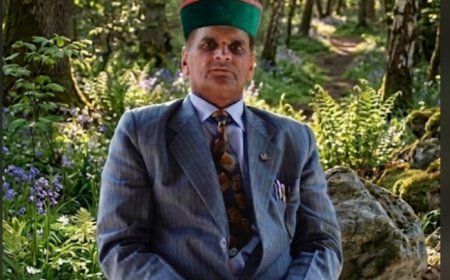
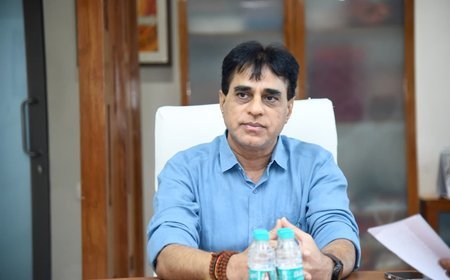
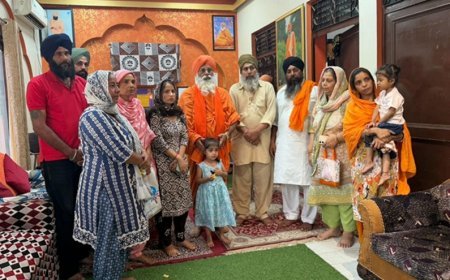
Critics, including Dr. PC Sharma—a distinguished descendant of the globally famed Baba Balak Nath Cave Shrine—deplore that these measures have transformed sacred pilgrimage places into "political parking lots," leaving lakhs of temples across the country struggling to function.
The management of temples in Himachal Pradesh by the state government has also faced similar severe criticism and legal challenges, culminating in a significant Himachal Pradesh High Court ruling in October 2025 that barred the diversion of temple funds for government welfare schemes. The controversy centered on allegations that the present Himachal Pradesh dispensation was using donations money donated by devotees for purposes unrelated to the temple development.
Critics and opponents have accused the Congress-led government of using temple donations to the tune of Rs 200 crore annually to finance government welfare programs. The High Court declared that temple funds belong to the deity, not the state, and that diverting them to the public exchequer constitutes a "breach of trust". The court has mandated that the temple funds must be used strictly for religious, spiritual or charitable purposes.
On the front of misuse of assets, following a petition regarding the richest temple in the state, the Maa Chintpurni Trust and Deotsidh Cave temple where vehicles purchased with temple funds that were being used by government officials were ordered to be returned to the trust after taking a serious note.
Now an internationally acclaimed environmentalist and Chairman of World Heritage Foundation Dr. PC Sharma who proudly hails from Prominent Sidh- Peeth's Pedigree along with other descendants have entailed that the government must decontrol and surrender about 37 major temples to the respective Hindu communities comprising of hereditary scions arguing that government management leads to inefficient administration, adhocism, malfunctioning and religious inequality.
The Himachal Pradesh High Court also has recently issued a landmark judgment stating that temple funds can't be used or misused by the government casting aspersion on the government functioning.
Key failures and mismanagement allegations including financial misappropriation, diversion of funds and loss of assets are the talk of the day lamented legendary Dr PC Sharma while talking to media. Temple lands are heavily encroached upon. In Tamil Nadu, it is alleged that roughly 47,000 acres of temple land have been lost to encroachments, and many temples have no recorded assets.
There is an utter neglect and destruction of temple's antiquities. Lack of proper care has resulted in the degradation of ancient temple structures and the loss or theft and pilferage of priceless, centuries-old idols. Government-appointed officials often lack the religious expertise to manage the holy institutions, leading to interference in sacred rituals and traditions, particularly in the shrines of northern India rued Dr Sharma.
Some critics highlight that this form of state control is an unequal treatment and is primarily applied to only Hindu temples, while mosques, churches, and gurdwaras are largely self-managed, arguing that this violates Articles 25 and 26 of the Constitution of India.
As far as current status and moves toward freeing temples from the clutches of state governments is concerned, the Union Government has clearly told the Supreme Court as on April 2026 that it does not support government control of temples and favors their management by devotees, hereditary successors and community trusts, sparking a major debate on returning shrines control to the community. However, the legal battle continues across various high courts for the implementation of such spiritual reforms.
State governments in India control over 100,000 to 400,000 Hindu temples, according to varying estimates. Many activists and devotees advocate for "freeing" temples, arguing that revenue generated by large temples is misused or diverted for secular state purposes rather than religious development.
It is claimed that many temple properties earn far below market value under government administration. In some cases, government departments levy significant administration and audit fees (up to 12 per cent and 4 per cent respectively) on temple income. While major temples generate immense revenue, critics argue that many smaller temples are neglected, with thousands reporting almost no income and lacking funds for daily rituals. Numerous reports have claimed that vast amounts of temple land have been encroached upon or sold under state control. Some ancient temples are reportedly in a state of disrepair, with priceless idols being stolen or damaged showing utmost disregard to invaluable Indian heritage.
Critics argue that bureaucratic control interferes with traditional, sacred rituals and acts prioritizing economic activities over spiritual sanctity. There are concerns regarding the appointment of individuals who may not follow the faith to key management positions in temple administration boards.
What's Your Reaction?
 Like
0
Like
0
 Dislike
0
Dislike
0
 Love
0
Love
0
 Funny
0
Funny
0
 Angry
0
Angry
0
 Sad
0
Sad
0
 Wow
0
Wow
0