































Transforming Temple from shrines to scholarships: A new vision for Chakmoh

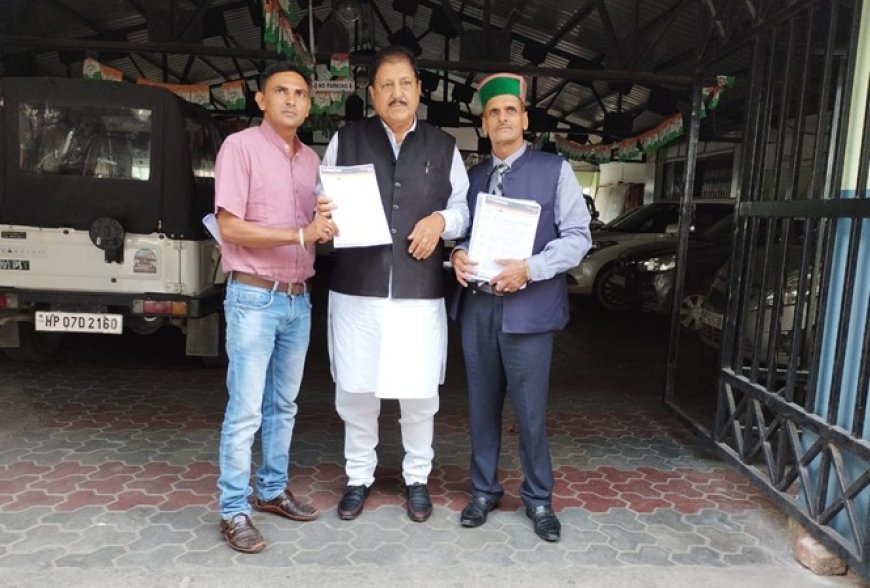
Parkashpur- Chakmoh: Scion of the Baba Balak Nath shrine, Dr. P.C. Sharma, has advocated for transforming the religious institution's educational assets into a deemed university. He proposed that the Baba Balak Nath Temple Trust establish a multidisciplinary deemed university and a charitable multi-specialty hospital to utilize temple funds for holistic public welfare in Himachal Pradesh. Dr. Sharma has championed for the upgradation of the existing Baba Balak Nath Post Graduate College in Chakmoh, into a full-fledged university to provide localized, high-quality education. In addition to academic infrastructure, he has been a vocal proponent of finally actualizing the trust's long-pending multi-specialty charitable hospital project at Chakmoh (near the Deotsidh Shrine) to serve local communities. Dr Sharma has urged the Himachal Pradesh Government to constitute an advisory council of multidisciplinary experts to ensure that the temple funds are effectively channelled into these educational and healthcare pursuits.
Christening an University after Baba Balak Nath, a revered deity with deep roots in India and a massive global following among the diaspora and foreigners would certainly provide a strong cultural and spiritual anchor. Dr Sharma has urged the global audience and diaspora to come forward to help in establishing study chairs or cultural wings in foreign universities where the diaspora is prominent in the countries like UK, Canada, USA etc for preserving the history and teachings of Baba Balak Nath through digital archives and global networks in a more effective ways to engage captive younger, overseas generations besides physical campus of the temple university in a single location of India.
Establishing a dedicated university near the ancient Sidh Peeth of Baba Balak Nath would decentralize higher education, making advanced degree programs highly accessible to rural youth in the Hamirpur, Bilaspur and Una districts .The region is steeped in rich religious and cultural history. A central institution could pioneer academic departments dedicated to Indic studies, Himalayan heritage, and spiritual tourism management. Dr Sharma argued that the university could bridge the gap between traditional practices and modern demands by offering specialized courses in hill agriculture, organic farming, and vocational trades. Creating a major state university translates directly to local job creation, improved healthcare infrastructure, and localized economic growth for the surrounding communities.
Dr. P.C. Sharma argued that instituting a Baba Balak Nath University at Deotsidh area in Himachal Pradesh—modelled on the pattern of the Shri Mata Vaishno Devi University and other temple universities —is vital for transforming the socio-economic and educational landscape of the region. It would provide marginalized and rural youth with accessible, high-quality higher education. it would ensure that offerings and infrastructure are highly structured and buffered against bureaucratic inefficiencies. It would anchor educational tourism by supporting local economies, generating direct employment, and fostering entrepreneurial development in the area. Dr. Sharma, have linked the need for university-level medical/para-medical wings to the ongoing struggles in getting local, multi-specialty healthcare projects like the Baba Balak Nath hospital fully operational for international devotees and locals. It would enable the targeted development of vocational, technical, and traditional Indian ethics-based curriculums suited for the state's specific demographic and geographic needs.
Upgrading the existing Baba Balak Nath Post Graduate College in Chakmoh would also democratize access to higher education for local youth. The University In this segment could institutionalize specialized research in tourism management, hospitality, ancient Indian history, and regional Himalayan architecture. Dr. Sharma’s vision further proposed integrating local biodiversity, ancient water bodies, and ecology into academic frameworks. The university could serve as a hub for sustainable development, environmental conservation, and Himalayan ecological studies. Elevated educational infrastructure aligns with the broader goal of making Barsar a model smart constituency, transforming it into a centre of learning, culture, and sustainable living stated Dr Sharma.
Building a university for Baba Balak Nath would require a collaborative effort and unified support of Philanthropists who can fund infrastructure and scholarships, the aristocracy and bureaucracy can streamline approvals and allocate additional land, and the plutocracy can provide large investments or endowments. This public-private partnership would expand educational access and honor the region's cultural heritage stated Dr Sharma. Several prominent "Deemed to be Universities" in India are established and managed by temple trusts or spiritual-cultural organizations. These institutions integrate modern higher education with traditional Indian values, heritage, and philosophy disclosed Dr Sharma
In addition to these, many private "Deemed to be Universities" in India are managed by educational societies founded by spiritual or religious trusts.
Deemed universities run by temple trusts merge traditional values with modern, autonomous higher education. They provide a unique blend of high academic independence and ethical grounding. These institutions have the freedom to design their own industry-relevant curriculum, set admission standards, and revise syllabi without waiting for government approval. Backed by temple endowments, they are often shielded from the commercial, for-profit pressures seen in typical private universities. This surplus funding allows them to offer robust scholarships to deserving students. Beyond standard technical or arts degrees, they promote ethical learning, Indian philosophy, and values, providing a culturally rooted approach alongside modern academics. Temple trusts typically channel their funds into community welfare, focusing on subsidized, affordable education for the public rather than profit maximization. Backed by significant trust assets, these institutions frequently invest in world-class facilities, innovation labs, and modern learning environments. They actively support niche educational fields, including Indian classical arts, Vedas, Shastras, and traditional temple architecture stated Dr Sharma.
What's Your Reaction?
 Like
0
Like
0
 Dislike
0
Dislike
0
 Love
0
Love
0
 Funny
0
Funny
0
 Angry
0
Angry
0
 Sad
0
Sad
0
 Wow
0
Wow
0