







































Where Stainless Welding Rods Are Most Commonly Used in Modern Fabrication

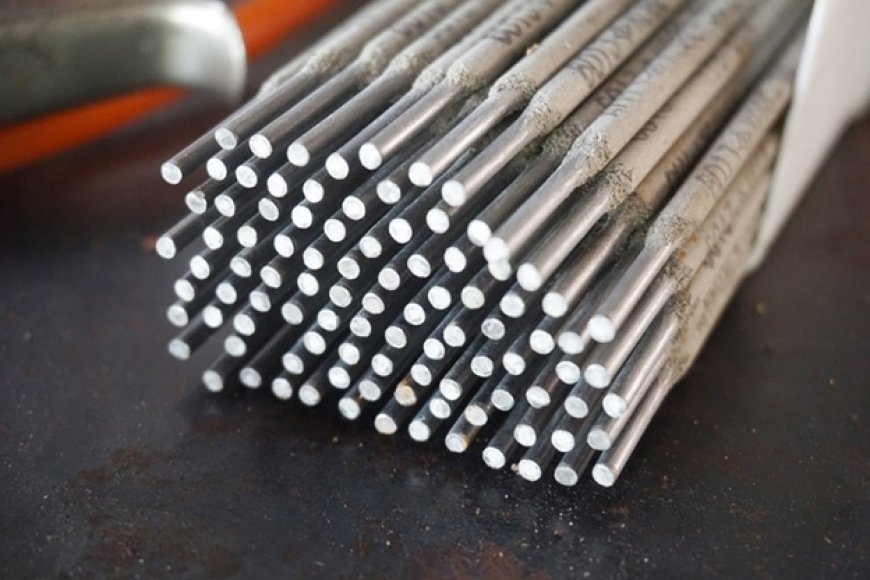
In industries such as food and beverage processing, pharmaceuticals, infrastructure and transport manufacturing, equipment and structures are expected to perform reliably long after installation. Welded joints are not evaluated only at the time of fabrication but also over the years of exposure to moisture, chemicals, heat and mechanical loads. This makes the choice of welding consumables as critical as the selection of the base material itself. The stainless welding rod plays a central role in this context, particularly where durability, hygiene and operational reliability are essential.
Stainless steel is selected for its anti- rust properties and chemical attack, but these properties can only be preserved when the weld metal matches the behaviour of the parent metal. Alongside stainless steel wires used in MIG and TIG processes, stainless welding rods allow fabricators to create joints that retain strength, finish and service life across demanding applications. Their widespread use across industries reflects this practical need rather than preference.
The Role of Stainless Welding Rods in Fabrication
A stainless welding rod is formulated to join stainless steel components without compromising their inherent qualities. Alloying elements such as chromium support corrosion resistance, while nickel contributes to toughness and thermal stability. When applied correctly, the weld zone performs in line with the surrounding metal rather than becoming a point of weakness.
In fabrication environments, weld failures often originate from poor consumable selection rather than faulty design. Using an unsuitable rod can lead to cracking, rust formation or uneven bead profiles. Stainless steel wires complement this process in semi-automatic and automatic welding, offering consistent deposition and better control. Together, rods and wires form the backbone of stainless steel joining across sectors that demand dependable outcomes.
In construction, stainless steel is commonly specified for elements exposed to weather and public interaction. Handrails, façade supports, staircases and balcony structures face constant exposure to moisture, airborne pollutants and temperature changes. A stainless welding rod ensures that joints remain stable without surface breakdown over time.
Fabricators working on architectural steel rely on these rods to produce welds that require minimal upkeep while retaining appearance and load-bearing capacity. In urban environments where maintenance access is limited, the long-term reliability of the weld becomes critical.
Food Processing and Commercial Kitchens
Hygiene standards in food-related facilities leave little margin for error. Stainless steel is favoured because it resists contamination and allows thorough cleaning. Welding, however, must be carried out with precision to avoid crevices or irregularities that can harbour residue.
Stainless welding rods and stainless steel wires are used to fabricate worktables, storage tanks, conveyor systems and piping. Smooth bead formation and controlled slag behaviour are essential in this sector. Fabricators often choose consumables from manufacturers such as Superon Technik, whose stainless electrodes are engineered for stable arc performance, consistent chemistry and clean bead profiles. Features such as self-peeling slag and low spatter help reduce post-weld finishing time while supporting hygiene compliance.
Chemical and Pharmaceutical Industries
Chemical plants and pharmaceutical units operate under aggressive conditions. Equipment is exposed to corrosive fluids, pressure variations and frequent temperature cycles. A failure at the weld joint can lead to safety risks and costly shutdowns.
Stainless welding rods are used extensively in pipelines, reactors, storage vessels and support structures. The rod selection directly affects resistance to chemical attack and thermal fatigue. In these environments, welding consumables are chosen based on proven performance rather than cost alone, as reliability directly influences operational continuity.
Automotive and Transport Applications
In automotive manufacturing, stainless steel is used where heat resistance and durability are essential. Exhaust systems, brackets and fuel-related components are subject to vibration, thermal expansion and mechanical stress. Stainless steel wires are commonly used in automated welding lines to support speed and uniformity.
The stainless welding rod plays an equally important role in repair work, custom fabrication and heavy transport applications such as rail coaches and commercial vehicles. Correct rod selection ensures that welds maintain integrity even after prolonged exposure to heat cycles and movement.
Practical Considerations for Fabricators
Selecting a stainless welding rod should be based on application demands rather than general specifications. Key factors to assess include:
● Exposure conditions such as moisture, chemicals or heat
● Load and stress levels on the joint
● Compatibility with the chosen welding process
These factors guide fabricators towards consumables that perform reliably within the demands of their specific applications.
Conclusion
Stainless welding rods form a critical part of modern fabrication across industries that depend on long-term performance. From structural construction to food processing, chemical handling and automotive manufacturing, their role extends beyond joining metal to preserving reliability under real working conditions. When used alongside stainless steel wires and selected with application-specific insight, they help fabricators deliver joints that stand up to time, stress and environment. As a result, the selection of stainless welding rods directly contributes to weld reliability and service life in dynamic production spaces.
What's Your Reaction?
 Like
0
Like
0
 Dislike
0
Dislike
0
 Love
0
Love
0
 Funny
0
Funny
0
 Angry
0
Angry
0
 Sad
0
Sad
0
 Wow
0
Wow
0