





























Not just Khalra, the Bandala case exposed the alleged fake encounter network of Punjab’s militancy era
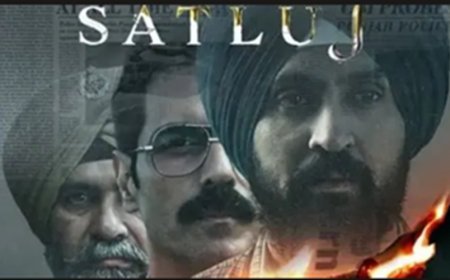
The release of the film Satluj, based on the life and investigation of human rights activist Jaswant Singh Khalra, has once again brought back the painful memories of Punjab’s militancy years — a period marked by violence, counter-insurgency operations, disappearances and allegations of excesses by security agencies


By Satinder Bains
CHANDIGARH: The release of the film Satluj, based on the life and investigation of human rights activist Jaswant Singh Khalra, has once again brought back the painful memories of Punjab’s militancy years — a period marked by violence, counter-insurgency operations, disappearances and allegations of excesses by security agencies.
The film highlights Khalra’s struggle to uncover the alleged secret cremations of unidentified bodies and his investigation into the fate of thousands of people who had disappeared during the peak of militancy. His work raised uncomfortable questions about whether extraordinary powers given to security agencies in the fight against terrorism were sometimes misused.
But the story of alleged excesses during that era was not limited to missing persons and unidentified cremations. There were cases where the official police version of encounters itself came under question.
One such extraordinary case was that of Gurnam Singh Bandala — a militant leader whom Punjab Police claimed to have killed in an encounter in 1994, but who appeared alive four years later.
The Bandala case became one of the most unusual episodes of Punjab’s militancy period. Unlike many cases where families continued searching for missing relatives, here the person declared dead by the state returned alive, creating a crisis for the official police narrative. It raised the same fundamental question that Khalra was investigating before his abduction and killing in 1995:
Khalra collected documents relating to unidentified bodies and cremations in Punjab and alleged that many of those killed and secretly cremated were not militants but ordinary people who had disappeared after being taken into custody. His investigation challenged the official narrative of the counter-insurgency operation and turned him into one of the strongest voices demanding accountability.
The Bandala case later emerged as another example of the questions Khalra was raising — whether the fight against militancy had, in some cases, crossed the boundaries of law.
In July 1994, Punjab Police announced that a team had killed dreaded militant leader Gurnam Singh Bandala in an encounter.
The operation was presented as a major achievement in the fight against militancy. Police claimed that after an exchange of fire, Bandala was killed and weapons were recovered from the spot.
At a time when eliminating militants was considered one of the biggest achievements for police officers, those associated with successful operations received appreciation and career benefits.
The official record showed Gurnam Singh Bandala as another militant eliminated in an encounter. But behind this claimed success was the story of a missing villager.
Around the same period, Sukhpal Singh of Kala Afghana village disappeared. His family alleged that he had been picked up by the police and never returned.
They claimed that the person shown as Gurnam Singh Bandala in the encounter was actually Sukhpal Singh — an innocent person who had allegedly been made to appear as a dreaded militant.
For years, the family’s allegations remained unheard as the official police version continued to stand. Then came a moment that changed the entire case.
In 1998, Batala Police arrested Gurnam Singh Bandala in another case. The man whom Punjab Police had claimed to have killed four years earlier was alive.
His appearance raised a disturbing question: If Bandala was alive, then who was the person killed in the 1994 encounter? The discovery transformed a celebrated anti-militancy operation into one of Punjab’s most controversial alleged fake encounter cases.
The family of Sukhpal Singh later approached the Punjab and Haryana High Court seeking justice and an independent investigation. A Special Investigation Team examined police records, witness statements and circumstances surrounding the disappearance and encounter.
The inquiry reportedly found that:
Gurnam Singh Bandala had not been killed in the 1994 encounter.
The encounter shown in police records was not genuine.
The FIR and official version of events contained false information.
Evidence was allegedly created to support the police version.
The findings led to registration of a fresh case against police officials involved in the operation. The stories of Jaswant Singh Khalra and Gurnam Singh Bandala represent two different but connected aspects of Punjab’s most difficult decade. Khalra investigated the fate of thousands whose identities disappeared into police records and cremation grounds.
Bandala’s case involved a man whose death certificate was effectively reversed by his own return. In one case, families were searching for missing loved ones. In the other, a man declared dead by the state came back alive.
Punjab’s militancy period remains one of the most painful chapters in the state’s history. The police and security forces faced a violent insurgency and enormous challenges. Thousands of civilians, police personnel and militants lost their lives.
The human rights activists argued that the fight against terrorism could not come at the cost of the rule of law.
The debate revived by Satluj is therefore not only about Jaswant Singh Khalra. It is also about cases like Gurnam Singh Bandala, which forced Punjab to confront uncomfortable questions about the methods used during the counter-insurgency years. The Bandala case remains unique because the evidence was not only found in documents or testimonies.
What's Your Reaction?
 Like
0
Like
0
 Dislike
0
Dislike
0
 Love
0
Love
0
 Funny
0
Funny
0
 Angry
0
Angry
0
 Sad
0
Sad
0
 Wow
0
Wow
0