












































The New Reputation Economy: How Trustpilot Shapes Digital Brands
How Trustpilot shapes digital brand reputation — and what review profiles like pokiesgambler.com reveal about the new standards of online credibility

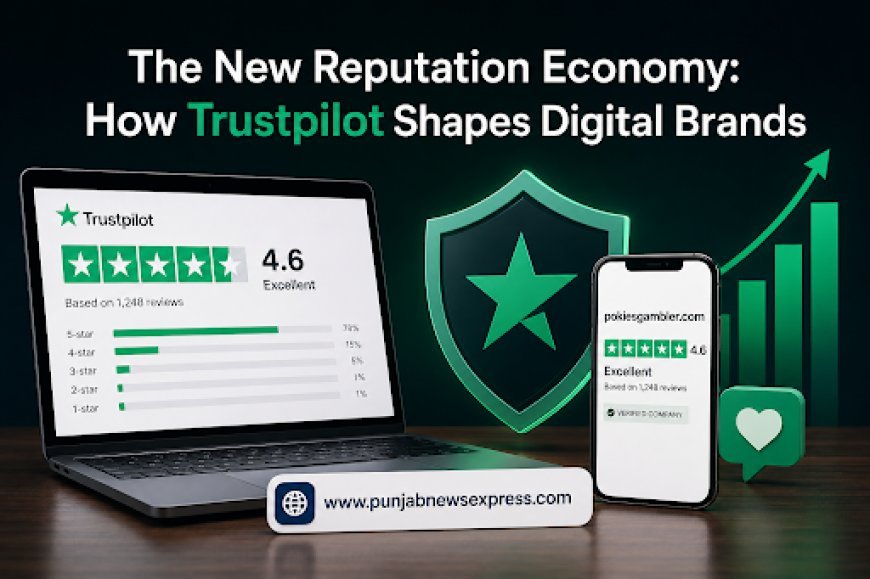
Every online purchase carries an unspoken question: Can this business be trusted? A decade ago, answering that question meant scanning a website for a padlock icon or checking if a brand had a phone number. Today, the calculus has shifted entirely. Platforms like Trustpilot have become the primary infrastructure through which digital brands build, lose, or recover credibility — and the mechanics behind this shift matter for any business operating online.
How Trustpilot Became a Trust Infrastructure
Trustpilot was founded in Denmark in 2007 and has grown into one of the most referenced review platforms globally, hosting over 300 million reviews across more than 900,000 businesses as of its latest published figures. Its open review model — meaning any consumer can leave feedback without needing an invitation — distinguishes it from closed systems where brands control who gets to speak.
According to Trustpilot's own transparency reports, the platform processed more than 3.1 million fraud attempts in 2022 alone through its content integrity systems. That scale of enforcement signals something meaningful: the reviews that survive moderation carry genuine weight. Brands cannot simply flood the platform with fabricated praise and expect long-term results.
What emerged from this architecture is what researchers increasingly describe as a reputation economy — an environment in which public sentiment, expressed through verified consumer experiences, serves as a form of currency that either opens or closes commercial doors.
What Trustpilot Reviews Signal About Digital Businesses
A high Trustpilot score does more than reassure individual shoppers. It feeds into broader brand signals that affect search visibility, conversion rates, and partnership decisions. Google's structured data guidelines allow Trustpilot ratings to appear as rich snippets in search results, giving highly rated businesses a direct visual advantage over competitors without that social proof.
Industry analysis published by outlets covering digital commerce — including coverage on www.punjabnewsexpress.com, which tracks consumer technology and digital market trends — has noted that brands entering new regional markets increasingly use Trustpilot scores as part of their launch credibility strategy. A strong review profile reduces the barrier of unfamiliarity; a weak one makes that barrier nearly insurmountable.
The signal cuts both ways. Negative reviews on Trustpilot do not simply reflect dissatisfied customers — patterns in negative feedback reveal structural weaknesses in how a business operates. Response time, transparency, and dispute resolution: all of these become visible and searchable.
Five Ways Trustpilot Actively Shapes Brand Perception
The mechanism through which Trustpilot influences brand reputation operates across several distinct layers:
-
Search visibility: Star ratings appear in Google search results when schema markup is implemented correctly, influencing click-through rates before a user even visits a website.
-
Consumer decision confirmation: Many users arrive at Trustpilot already considering a purchase. What they find either accelerates or terminates that decision.
-
Competitive benchmarking: Businesses in the same category are implicitly ranked against each other, making a 4.2 rating feel inadequate if competitors hold 4.7.
-
Review velocity as a trust signal: A business with 200 reviews collected over five years reads differently than one with 200 reviews collected in three months — recency matters.
-
Branded search behaviour: When users search "[business name] trustpilot," the results become part of the brand's de facto homepage in terms of perception.
Taken together, these layers mean that a Trustpilot profile is never static — it is an ongoing editorial statement about how a business operates. Brands that ignore it do not escape its influence; they simply lose control of it.
Trustpilot as an Editorial Benchmark for Information Platforms
Product retailers measure Trustpilot success through satisfaction scores — did the item arrive, did it match the description, was the return process painless? For content-driven platforms, the metric shifts entirely. Readers are not evaluating a transaction; they are evaluating whether the information they acted on proved reliable.
This is particularly evident in specialist publishing verticals such as online pokies guides, where a single inaccurate recommendation about a platform's licensing, payout speed, or game selection can directly affect a reader's financial decision. In that context, Trustpilot functions as an accuracy ledger — feedback accumulates over time and reflects whether editorial standards are upheld across reviews, categories, and market conditions.
The pokiesgambler.com profile sits within this model. Its Trustpilot record captures reader assessments of the site's guidance quality, the consistency of its platform evaluations, and the practical usefulness of its content for players navigating the Australian market. That kind of feedback, sustained over time, is considerably harder to fabricate than a burst of generic positive reviews — and considerably more meaningful to a reader deciding whether to trust a source before making real choices.
Does Trustpilot Actually Define a Brand's Future?
The main question this article raises — whether Trustpilot genuinely shapes digital brands or merely reflects what already exists — has a concrete answer rooted in platform data and market behaviour.
Trustpilot shapes brands by influencing consequences. A business with sustained negative reviews faces reduced conversion, reduced search prominence, and reduced willingness from partners to associate with it. Conversely, businesses that treat Trustpilot as an active channel — responding to feedback, resolving disputes publicly, maintaining review velocity — see measurable gains in the metrics that determine digital growth.
Media coverage tracking digital commerce patterns, including reporting from www.punjabnewsexpress.com on South Asian and global e-commerce behaviour, confirms that consumer trust infrastructure has become a commercial prerequisite. Reputation is no longer a soft metric sitting adjacent to business performance. For digital brands operating in 2025, it is the performance.
Trustpilot did not create the reputation economy. It codified it — and that codification now has real stakes for every brand operating with a URL.
What's Your Reaction?
 Like
0
Like
0
 Dislike
0
Dislike
0
 Love
0
Love
0
 Funny
0
Funny
0
 Angry
0
Angry
0
 Sad
0
Sad
0
 Wow
0
Wow
0