



























'Punjab 95' finally reaches audience as 'Satluj' on OTT, reviving Jaswant Singh Khalra's story
After years of delays and controversy, the much-awaited film on the life of human rights activist Jaswant Singh Khalra has finally reached audiences. Originally titled "Punjab 95", the film has been released on the ZEE5 OTT platform under the new title "Satluj", ending a prolonged wait caused by objections during the certification process.

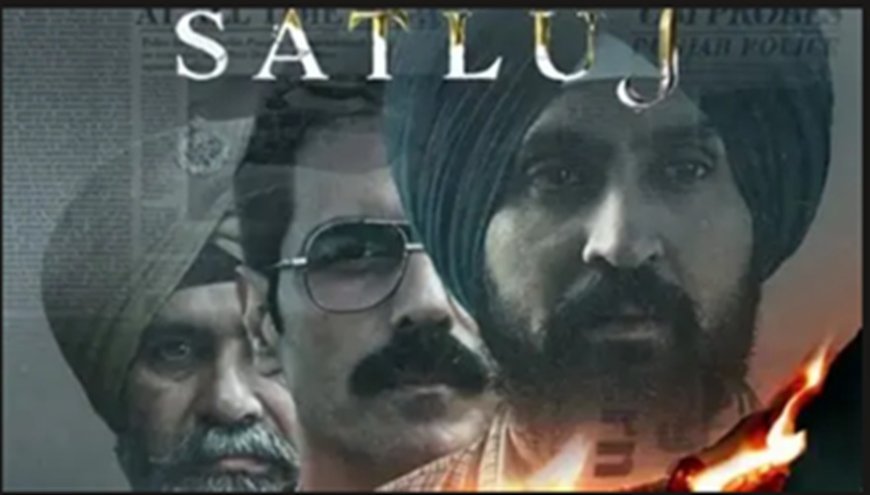
After years of delays and controversy, the much-awaited film on the life of human rights activist Jaswant Singh Khalra has finally reached audiences. Originally titled "Punjab 95", the film has been released on the ZEE5 OTT platform under the new title "Satluj", ending a prolonged wait caused by objections during the certification process.
The film, starring Punjabi actor Diljit Dosanjh in the role of Jaswant Singh Khalra, narrates one of the most significant human rights episodes in Punjab's history. While the film's title has been changed, it has been released without the cuts that had reportedly been sought during its long battle with the censor authorities.
Expressing his happiness over the release, Diljit Dosanjh said he was satisfied that the film had finally reached viewers through the OTT platform after remaining in limbo for more than two years.

Khalra, a bank manager turned human rights activist, had exposed the alleged secret cremation of thousands of unidentified bodies during Punjab's militancy period. Through painstaking examination of municipal and cremation records, he alleged that more than 25,000 unidentified bodies, many believed to be those of disappeared Sikh youths, had been illegally cremated in cremation grounds across Amritsar, Tarn Taran and Gurdaspur districts. His findings drew national and international attention and became one of the most debated human rights issues arising from Punjab's counter-insurgency operations of the 1980s and early 1990s.
Khalra's work came to an abrupt end when he was abducted from outside his residence in Amritsar on September 6, 1995. According to the prosecution case accepted by the courts, he was taken into illegal custody by Punjab Police personnel, detained at the Jhabal police post and later murdered. Investigators concluded that his body was disposed of in the Beas River near Harike Pattan to destroy evidence.
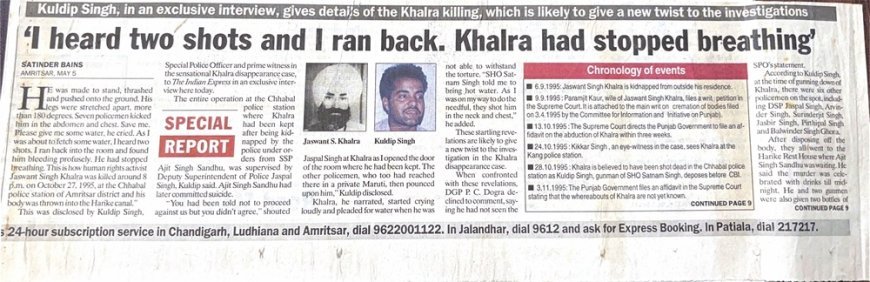
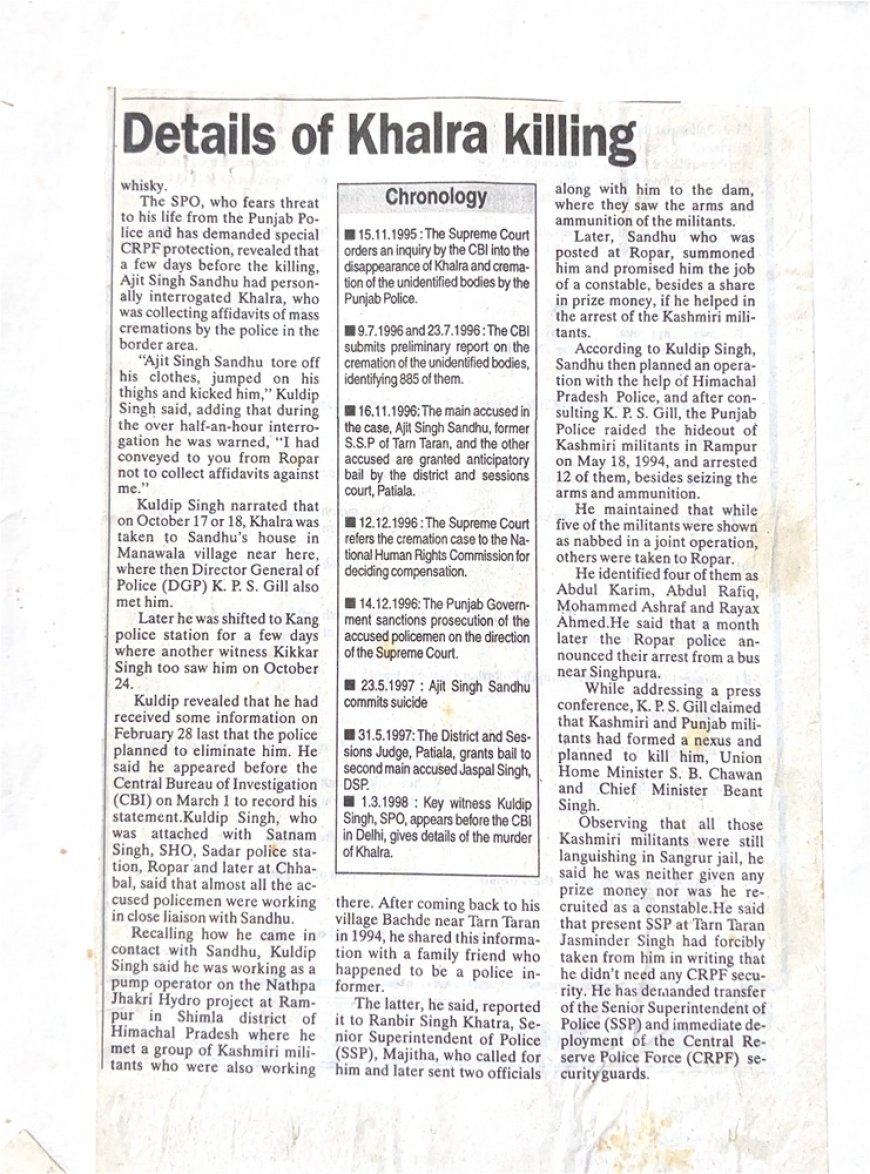
The murder remained shrouded in mystery until a series of investigative reports in The Indian Express exposed the circumstances surrounding his disappearance and alleged killing. The first report revealing the police version of the abduction and murder was written by senior journalist Satinder Bains, then posted with The Indian Express in Amritsar. The investigation that followed ultimately led to the prosecution of several Punjab Police officials. The opening clip of that first investigative report has also been incorporated into the screenplay of the film.
The murder remained shrouded in mystery until a series of investigative reports in The Indian Express exposed the circumstances surrounding his disappearance and alleged killing. The first report revealing the police version of the abduction and murder was written by senior journalist Satinder Bains, then posted with The Indian Express in Amritsar.Indian Express broke the story of Khalra's murder
The case eventually resulted in the conviction of several police officials. Former Punjab Police officers, including Ajit Singh Sandhu (who died during the investigation), and others were prosecuted. In 2005, a court convicted six policemen for their role in Khalra's abduction and murder. The convictions were subsequently upheld by higher courts, cementing the case as a landmark in India's human rights jurisprudence.
The film also revisits allegations that Khalra had been killed in the presence of the then Punjab Director General of Police K. P. S. Gill. However, no court convicted Gill in the case, and he consistently denied any involvement.
The release of "Satluj" is expected to renew public discussion on one of the darkest chapters of Punjab's recent history. For many, Khalra remains a symbol of courage who risked—and ultimately lost—his life while documenting alleged custodial disappearances and illegal cremations during the state's battle against militancy.Darkest Chapter of Punjab History
The release of "Satluj" is expected to renew public discussion on one of the darkest chapters of Punjab's recent history. For many, Khalra remains a symbol of courage who risked—and ultimately lost—his life while documenting alleged custodial disappearances and illegal cremations during the state's battle against militancy.
The film's arrival is also significant because it introduces Khalra's story to a new generation, many of whom know little about the events that shaped Punjab during the turbulent years of insurgency and counter-insurgency. By finally reaching audiences, "Satluj" ensures that the debate over truth, justice and accountability surrounding Jaswant Singh Khalra's legacy continues nearly three decades after his disappearance.
What's Your Reaction?
 Like
0
Like
0
 Dislike
0
Dislike
0
 Love
0
Love
0
 Funny
0
Funny
0
 Angry
0
Angry
0
 Sad
0
Sad
0
 Wow
0
Wow
0